
Is Oat Milk Healthier Than Cow's Milk?
A Simple Guide to Plant-Based Milk
Updated February 2026
Plant‑based milk is everywhere, from cereal bowls to coffee shops. But with so many choices, it can be hard to know what’s healthiest. Is oat milk better than almond milk, or should you stick with cow’s milk?
“Plant-based milk is not necessarily healthier than cow's milk," says Julie Holbrook, MS, RDN, LDN, CSSD, a dietitian at Northwestern Medicine. “Both plant-based and cow’s milk have pros and cons.”
Both plant-based and cow’s milk have pros and cons.— Julie Holbrook, MS, RDN, LDN, CSSD
Learn how plant-based options compare to cow’s milk, what to look for on labels and how to pick a milk that meets your goals.
How Do Plant-Based Options Compare to Cow’s Milk?
Cow’s milk
Cow's milk contains high-quality protein and provides calcium that your body can easily absorb. It is also a good source of vitamins A and D and other important nutrients.
Cow’s milk is widely available and may be less expensive than many plant‑based milks. But not everyone can tolerate cow’s milk well, although lactose‑free options are available.
Nutrition information for a 1-cup serving of 1% cow’s milk:
- 100 calories
- 8 grams of protein
- 2 grams of fat
- 12 grams of carbohydrates
- 12 grams of sugar (0 grams added sugar)
Avoid drinking raw cow’s milk, which can put you at risk of foodborne illnesses. Raw milk may contain harmful bacteria like E. coli, Salmonella and Listeria. Most store-bought cow’s milk is pasteurized (heated to a specific temperature to remove bacteria, viruses and parasites).
Plant-based milk
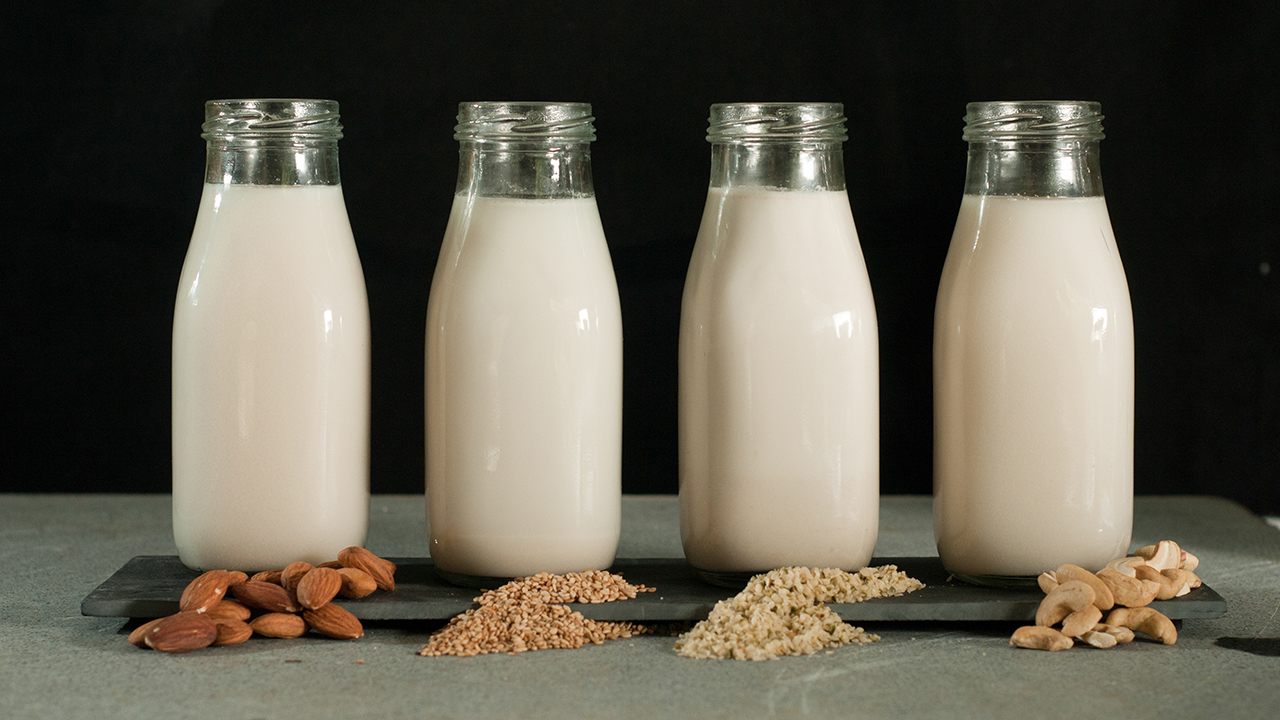
Each plant-based milk starts with a different base, such as nuts in almond milk and grains in oat milk. That’s why taste, thickness and nutrition can vary for each type.
Among plant‑based choices, soy milk and pea‑protein milk are closest to cow’s milk in terms of protein. Protein from soy milk contains all essential amino acids, similar to cow’s milk.
This list shows the nutrition information for different types of unsweetened plant‑based milk, based on a 1‑cup serving. Keep in mind that nutrition can vary by brand, even for the same type of milk.
- Almond milk
- 35 calories
- 1 gram of protein
- 3 grams of fat
- 1 gram of carbohydrates
- 0 grams of sugar
- Oat milk
- 100 calories
- 3 grams of protein
- 4 grams of fat
- 14 grams of carbohydrates
- 3 grams of sugar
- Soy milk
- 100 calories
- 7 grams of protein
- 4 grams of fat
- 8 grams of carbohydrates
- 1 gram of sugar
- Rice milk
- 115 calories
- 1 gram of protein
- 2 grams of fat
- 22 grams of carbohydrates
- 13 grams of sugar
- Cashew milk
- 35 calories
- 0 grams of protein
- 4 grams of fat
- 1 gram of carbohydrates
- 0 grams of sugar
- Coconut milk (carton, not canned)
- 50 calories
- 0 grams of protein
- 5 grams of fat
- 2 grams of carbohydrates
- 0 grams of sugar
- Pea-protein milk
- 80 calories
- 8 grams of protein
- 5 grams of fat
- 1 gram of carbohydrates
- 0 grams of sugar
What To Look for on Labels
“When selecting a plant-based milk, read the label to see if protein, calcium and vitamin D are listed,” says Holbrook. “Choose an unsweetened version to limit calories and unnecessary added sugars."
Check labels for the following (per 1-cup serving):
- Protein: 7 to 8 grams
- Added sugar: Less than 2 grams
- Calcium: 20% to 30% daily value (DV)
- Vitamin D: 20% DV or more
- Vitamin B12: especially helpful if you eat a dairy‑free or vegan diet
Shake the carton before opening the milk since minerals can settle at the bottom.
Common Additives in Plant-Based Milk
Plant-based milk can sometimes contain additives, including:
- Oils for creaminess
- Emulsifiers and thickeners like gelatin, guar gum or xanthan gum to keep it smooth
- Stabilizers to help prevent separation
If you are sensitive to additives, choose milk with fewer ingredients.
How To Add Plant-Based Milk to Your Diet
- Coffee: Oat milk and soy milk foam well and don’t curdle in hot coffee, but almond milk can separate in coffee.
- Smoothies: Almond milk, cashew milk and soy milk work well in smoothies. If you want more protein, choose soy milk or pea-protein milk.
- Enjoying it on its own: Oat milk is naturally sweet, and unsweetened almond milk is light and low in calories.
- Cooking and baking: Soy milk is most similar to cow’s milk when heated or used in recipes. Cashew milk is great for creamy soups and sauces. Oat milk works well in baked goods andotherplant-based milk recipes.
What Type of Milk Should You Choose?
- Children age 1 to 5 years old: The American Academy of Pediatrics recommends drinking whole cow’s milk until age 2 (unless your child has a dairy or milk allergy). Once your child turns 2, switch to skim or low-fat (1%) milk.
- Teens: If your teen does not drink cow's milk, soy milk and pea-protein milk are good choices. They provide protein, calcium and vitamin D.
- People who are pregnant: Choose brands that have more vitamins and minerals like calcium, vitamin D, iodine and vitamin B12. These nutrients help meet your increased daily needs.
- Older adults: Prioritize options with more protein, calcium and vitamin D for bone health.
- Athletes: Choose higher‑protein options like soy milk and pea‑protein milk.
- People with diabetes: Some plant‑based milks like rice milk can raise blood sugar. Lower‑carb, higher‑protein choices, such as pea‑protein milk, tend to have a steadier effect on blood sugar levels. Pair these types of plant-based milks with protein‑rich foods to help balance blood sugar.
- Environmental factors: Some people prefer plant‑based milk because it has a lower carbon footprint than cow’s milk. Look for brands that disclose sustainable farming practices, water stewardship and responsible sourcing.
- People with dairy allergies: If you have a dairy allergy or lactose intolerance, choose dairy-free milk options. Note that some plant‑based milks can contain allergens.
- People with a tree‑nut allergy should not drink nut milk like almond milk.
- People with a soy allergy should not drink soy milk.
- Depending on how the milk was processed, oat milk is not always an option for people with gluten intolerance.
Always read nutrition facts labels carefully. If you have questions about the best type of milk for you, talk to your doctor or a registered dietitian.
“There isn’t one best milk for everyone. Choose one that fits your nutritional needs and personal preferences," says Holbrook.


 Chrome
 Edge
Edge Safari
 Firefox